Mei Ling runs a small furniture shop in Petaling Jaya. Her website ranks on Google, so she figured she was covered.
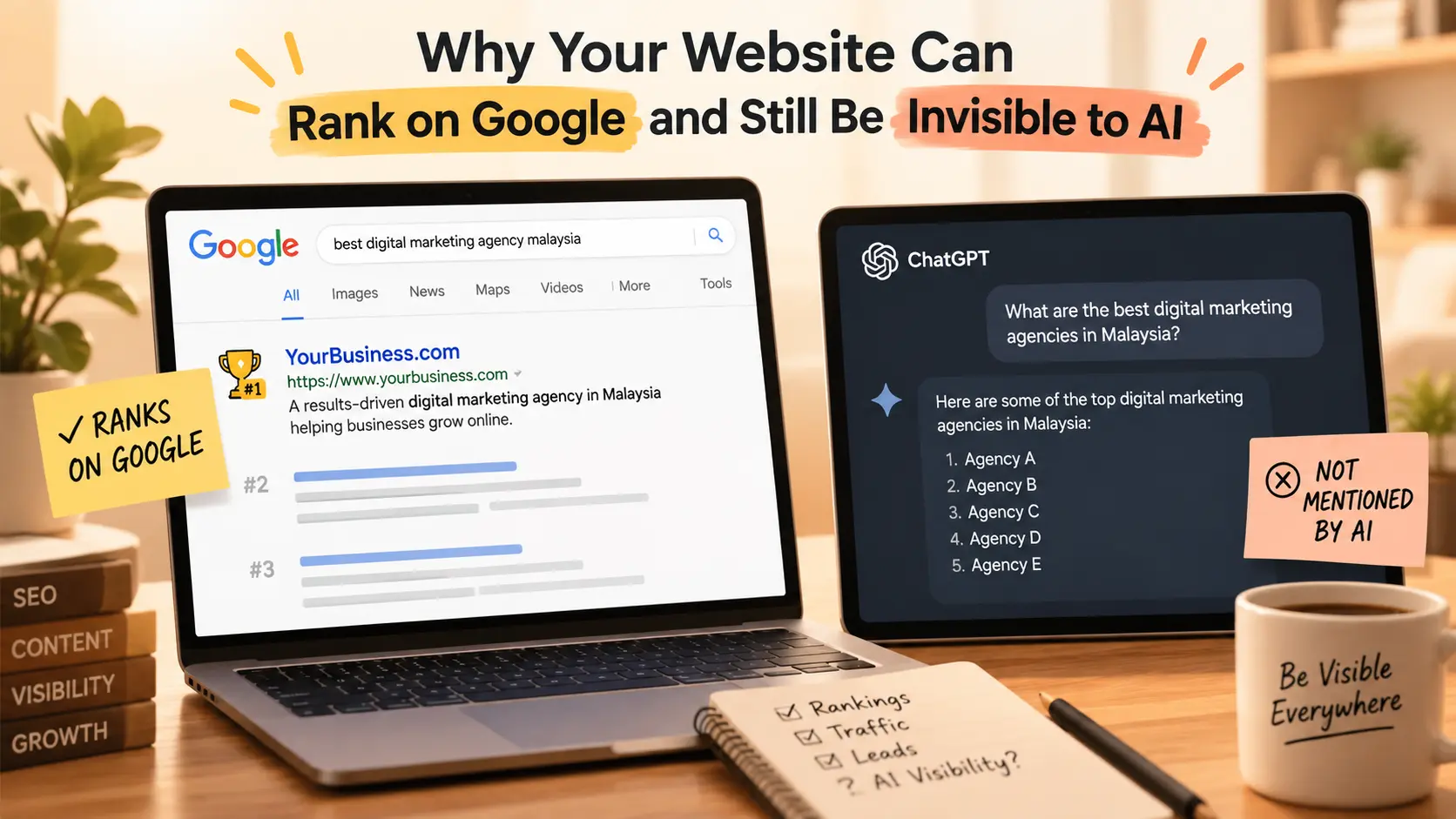
Then a regular customer almost bought from a competitor instead, because when she Googled a question, the rival’s answer showed up first, not Mei Ling’s. Around the same time, her nephew mentioned that when he asked ChatGPT for furniture shops in PJ, hers never came up.
Mei Ling had SEO. She was missing three other things most business owners have never heard of, and they are why a website can rank well and still lose customers. This post follows what happened to her shop so you can spot which of these your own website is missing.
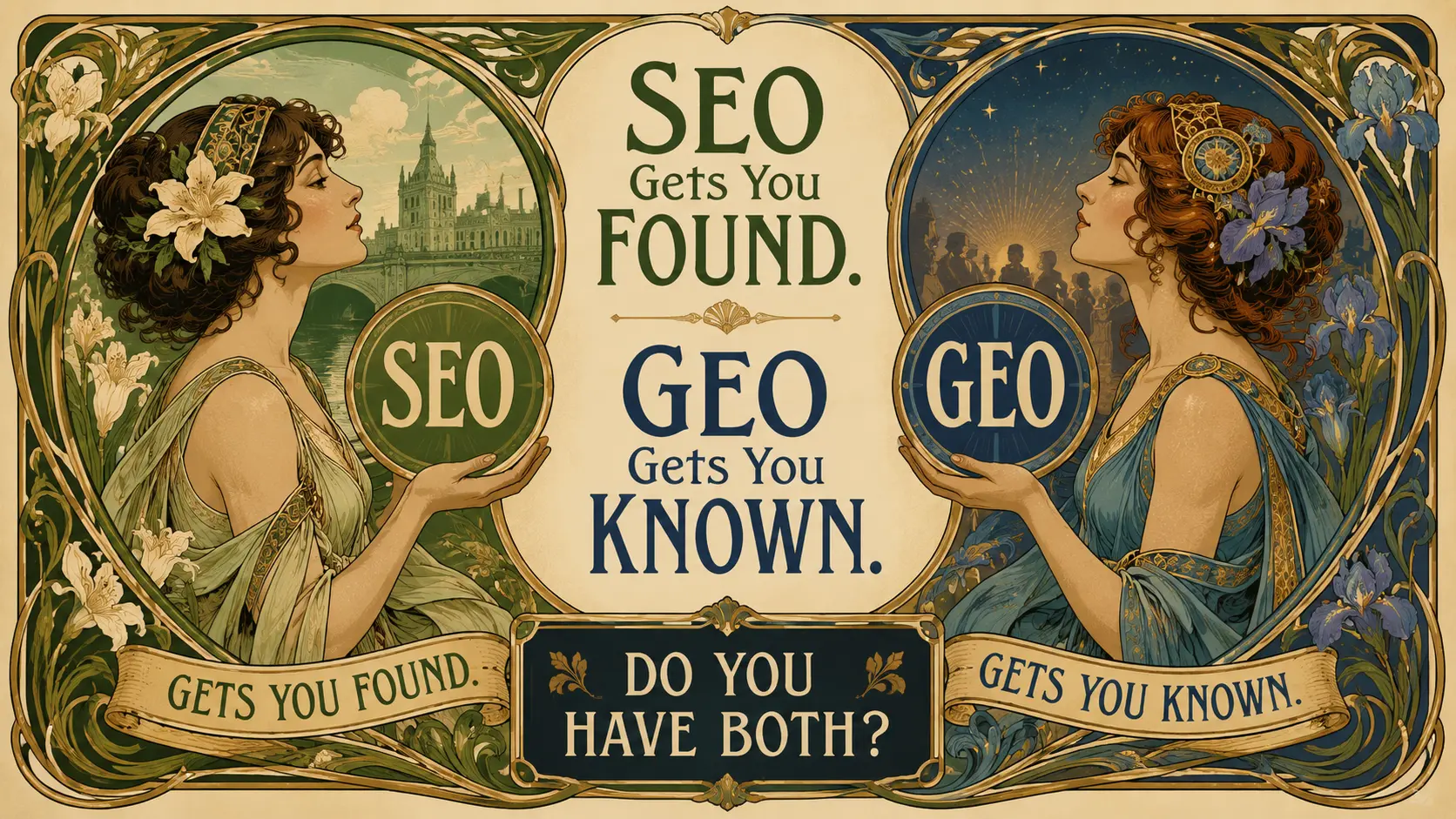
Your website can rank on Google and still be invisible to AI. SEO gets you found on Google, AEO gets your content picked as a direct answer, GEO gets your brand mentioned by AI chatbots, and AIO makes sure your site’s structure is readable by both. Most websites are strong in one of these and quietly weak in the other three.
What Was Mei Ling’s Website Actually Missing?
A fast, mobile-friendly site with content that matches what people search for.
Content structured so Google can lift it straight into the answer box.
Being a source AI chatbots trust enough to name in their answers.
The structural layer underneath the other three — clean, crawlable content.
SEO Got Her Found, But That Was Only the First Job
SEO is what got Mei Ling’s shop onto Google’s first page: a fast, mobile-friendly site, content matching what people search, and enough trust signals for Google to rank it. Mei Ling had this part right. Her problem was what SEO does not cover.
AEO Decides Who Gets Picked as the Direct Answer
Answer Engine Optimization is why the competitor’s answer beat Mei Ling’s. For question searches, Google often pulls one answer straight into a box above the ranked links. AEO means structuring content so it is easy to lift out that way: clear questions, short answers, no burying the point. Mei Ling had the right information, just buried in paragraphs Google could not easily extract.
GEO Decides Whether AI Tools Mention You at All
Generative Engine Optimization is why Mei Ling’s shop never came up on ChatGPT. AI tools do not rank links, they generate an answer from sources they trust and decide which brands are worth naming. If your site is not one of those sources, you do not exist in that answer, no matter how well you rank on Google. We go deeper into this shift in Stop Chasing GEO. Start Here Instead.
AIO Is the Reason the Other Three Kept Failing Quietly
AI Optimization is the structural layer underneath the other three: clean headings, structured data, content that is not locked behind heavy scripts. Mei Ling’s site looked fine to a human visitor, but part of her product information loaded in a way AI crawlers could not read. She was not losing to better competitors. She was invisible for reasons that had nothing to do with her business.
How Do These Four Actually Show Up on the Same Website?
Think of it as four different visitors reading the same page, each one asking a different question:
One page, four different jobs. Mei Ling was only passing the first test.
Which of These Is Your Website Already Covering?
Each layer builds on the one below it. If the foundation is weak, everything stacked on top of it wobbles too:
A weak foundation makes every layer above it less stable.
You do not need technical tools to get a rough sense of where your website stands. Ask yourself:
-
SEODoes your site show up on Google for the searches your customers actually use?
-
AEOIf someone searches a question about your industry, does your content answer it clearly enough to get pulled into a featured box?
-
GEOIf you asked ChatGPT or Gemini to recommend a business like yours, would your name come up?
-
AIODoes your website’s content load in a way a crawler, not just a human, can actually read?
Most businesses can answer yes to one or two of these without ever having tried. The others are usually the real gap, and they rarely show up until a customer or a curious nephew stumbles onto them the way Mei Ling did.
Should You Build All Four at Once, or in Order?
Once you know which ones you are missing, the next question is usually timing: fix everything now, or work through them in order? SEO comes first, always, since AEO, GEO, and AIO all build on top of it. We cover the realistic timeline for GEO specifically, and why it takes longer than most business owners expect, in Why Showing Up on ChatGPT Takes Longer Than You Think.
So What Should You Actually Do With This?
Mei Ling’s shop was not losing customers because her business was weaker than the competition. It was losing customers because three quiet gaps sat underneath a website that looked completely fine. That is the part most business owners never see until it costs them a sale.
You do not need to fix all four gaps overnight, but you do need to know where they are. See how GES Growth Engine Solutions works — the free website audit gives you a quick SEO analysis across exactly these four areas, so you know precisely where your website stands before deciding what to fix first.
Not Sure Where Your Website Stands?
Chat with GES Growth Engine Solutions on WhatsApp and find out which of the four your site is missing.
Chat With Us on WhatsAppFrequently Asked Questions
Q: Is SEO dead now that AI tools answer questions directly?
No. SEO is still what gets your website found and trusted in the first place, and AEO and GEO both build on top of it.
Q: Do I need a different agency for SEO versus AEO or GEO?
Not necessarily. They are connected disciplines built on the same website, so working with a provider who handles both saves you from conflicting advice.
Q: How do I know if my website works for both Google and AI tools?
Run through the four self-check questions above, or get a professional website audit that checks all four areas at once.
Q: What is AEO, and is it different from just writing good content?
AEO is about how your content is structured, not just what it says. Clear questions and short answers make it easier for Google to pull your content into an answer box.
Q: Why doesn’t my business show up when I ask ChatGPT for recommendations?
This usually means your site is not one of the sources AI tools trust and cite, which is what GEO addresses.