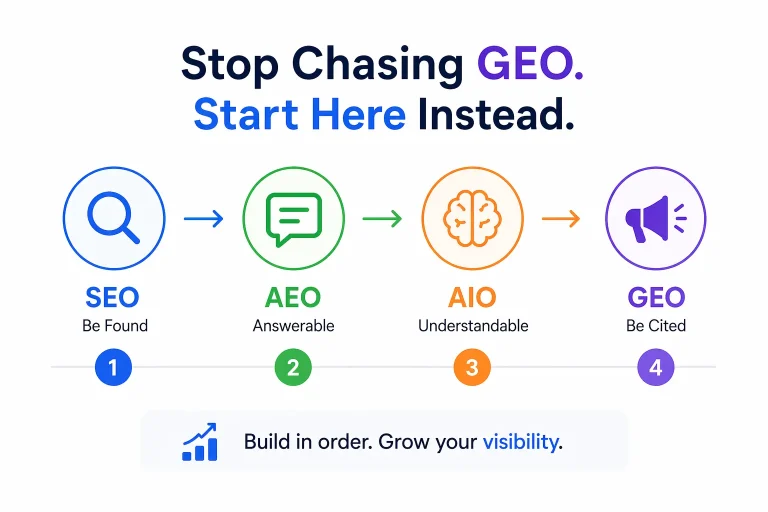
Most Malaysian business owners come to SEO with one question: how long before I see sales? It’s a fair question. Every business investment needs a return. But that question also reveals a misunderstanding that quietly derails a lot of SEO strategies in Malaysia before they even get started — because SEO and sales don’t work the way most people think they do. And GEO, the newer layer sitting on top of SEO, works in a way most business owners haven’t been introduced to at all.
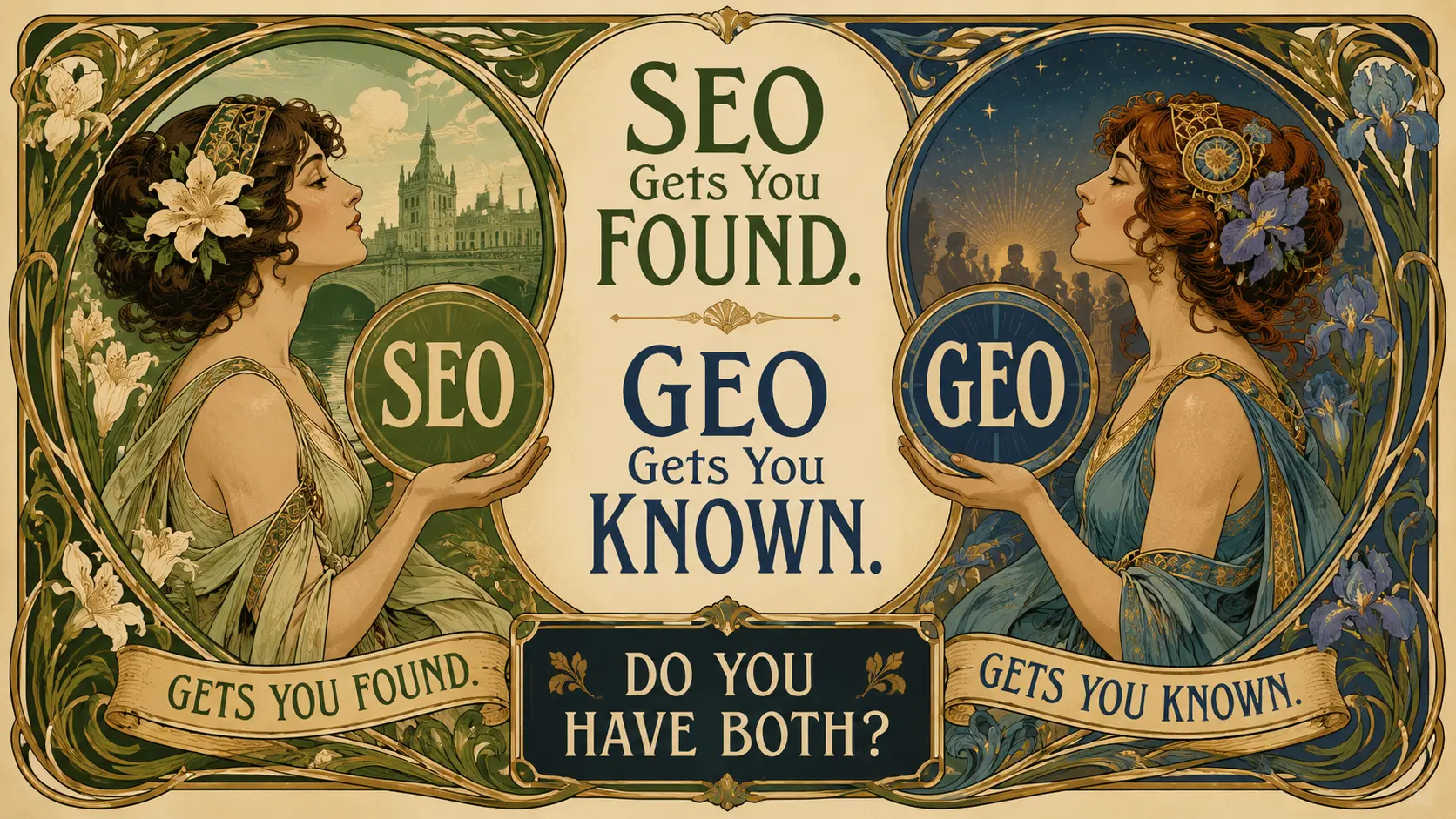
SEO is a keywords strategy — it puts your brand in front of the right audience at the right moment on Google. GEO is a branding strategy — it puts your brand inside the answers AI platforms give to people who haven’t even searched for you yet. One targets. The other introduces. When a customer walks into your showroom already knowing what your brand stands for, that’s not a coincidence — that’s GEO doing its job before you even knew the conversation started.
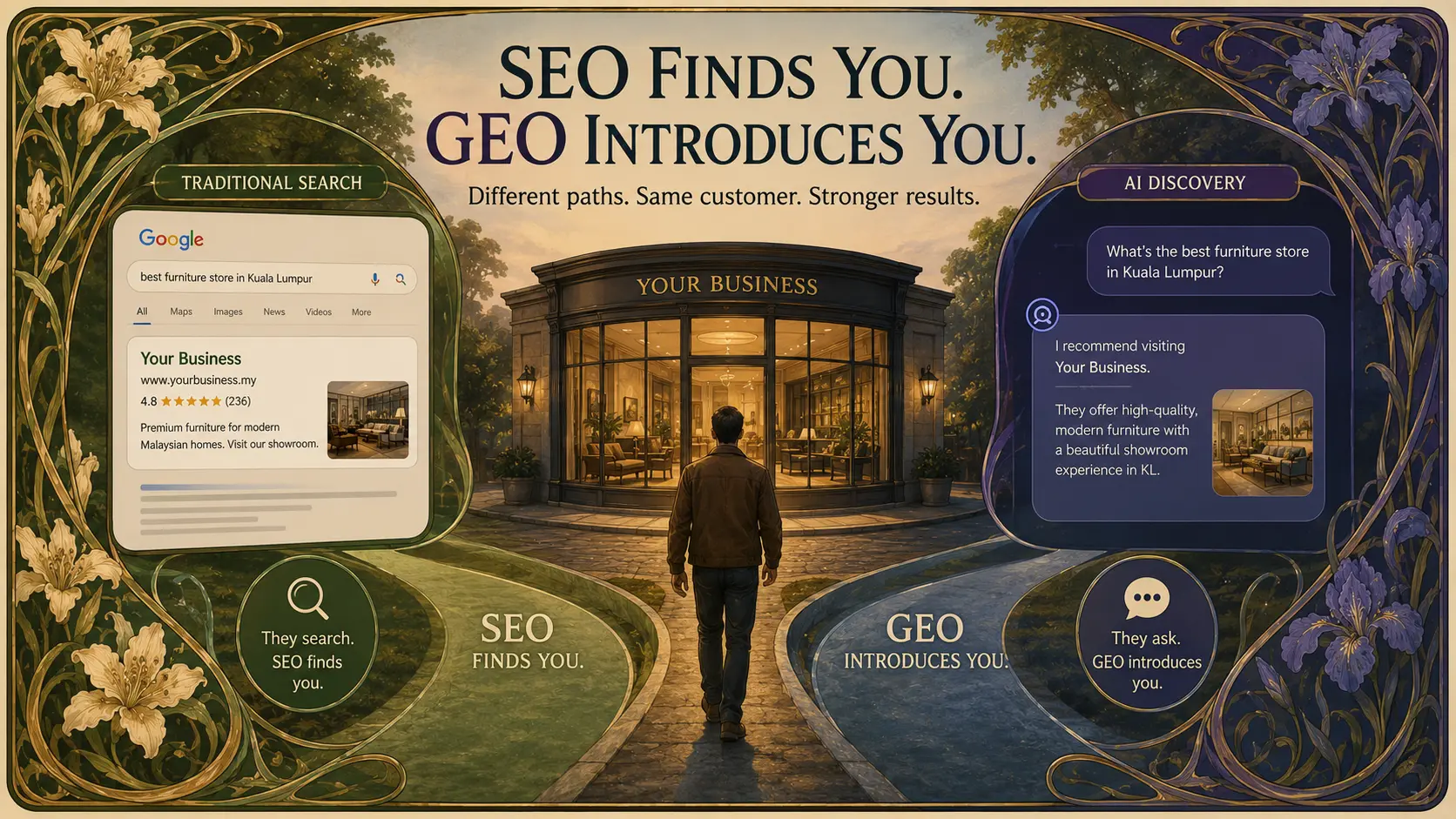
SEO finds you. GEO introduces you. Both roads lead to the same door.
Why Is Everyone Asking SEO for Sales When It Was Never Built for That?
Every business wants a return. That’s not the wrong goal — it’s the right goal asked at the wrong stage. SEO is not a sales machine. It never was. If you want leads this month, run ads. Ads are built for that — you pay, you appear, someone clicks, something happens. SEO works on a completely different clock. It builds authority quietly over months, earns trust through consistent signals, and compounds in value the longer it runs.
For most businesses running SEO in Malaysia, this timeline feels uncomfortable — but it is exactly how the channel is supposed to work. Expecting SEO to behave like a paid campaign is like planting a tree and checking for fruit the next morning. The tree is working. You just can’t see it yet.
Treating SEO like a paid ad campaign. If short-term leads are the goal, run ads — they are built for that. SEO is a long-term investment in visibility and audience trust, not a monthly lead generator.
Are Your Keywords Telling You What Your Customer Really Wants?
Here’s what most people miss about SEO keywords — they are not just words. They are signals. Any honest SEO practitioner in Malaysia will tell you that the keyword is not the destination — it is the map. When someone searches “freehold condo Petaling Jaya below 600k” or “best retail fitting room design KL,” they are not browsing. They are telling Google exactly where they are in their decision journey, almost down to the day.
A well-built SEO strategy reads those signals and puts your brand at precisely that moment. That is the real job of SEO — not to close a deal, but to make sure the right person finds you when they are already looking. The sale follows because the audience was right. Keywords are simply the language your customer uses before they know your name. SEO makes sure your brand is the answer waiting for them. If you’re starting out, a focused SEO trial is often the clearest way to see this in action before committing to a longer strategy.
What Is GEO, and Why Does It Start With Your Brand Identity?
Think about the last time you asked ChatGPT or Google’s AI a question about an industry — not a brand, just a topic. Something like “what should I look for when buying a property in Malaysia” or “how do I know if a retail brand is worth trusting.” The AI gave you an answer. It probably mentioned specific things to look for, red flags to avoid, and in some cases, actual brands or services worth considering. You did not search for those brands. The AI introduced them to you. That is what GEO looks like in Malaysia — and if your brand was not in that answer, someone else’s was.
weekly active ChatGPT users asking questions your brand could be answering
of Google searches now trigger an AI Overview instead of a plain list of links
What Happens When a Customer Already Knows Your Brand Before You Say a Word?
GEO branding only works if your brand identity is clear enough for an AI platform to explain it to a stranger. This is why GEO is a branding strategy, not a content volume game. An AI does not cite a brand because it published fifty blog posts. It cites a brand because that brand stands for something specific, consistent, and explainable in one or two sentences. Google’s own guidance on helpful content has been pointing in this direction for years — trusted, people-first brands consistently outperform keyword-heavy pages with no clear identity.
If your brand is vague — if you are “a property developer in KL” or “a fashion retail store with good prices” — there is nothing for the AI to hold onto. But if your brand has a distinct position, a clear audience, and a story that repeats consistently across your content, AI platforms start recognizing you as a credible source worth mentioning. By the time a customer walks into your showroom, they already know what you stand for. They came in warm.
GES Growth Engine Solutions calls this the moment GEO earns its place — not in the traffic report, but in the room.
See How GES Builds GEO Visibility for Your Brand →
What Does This Mean for Your Business in Malaysia Right Now?
Are Malaysian Businesses Missing the Conversation That Happens Before Google?
Here is what a typical Monday morning looks like for your next customer. They wake up, open ChatGPT, and type something like “which property developer in Klang Valley is actually reliable” or “what should I look for in a retail brand before I trust them.” The AI responds with names, explanations, and context. Your competitor is in that answer. You are not. By the time that customer opens Google — if they even bother — they already have a shortlist. You were never on it.
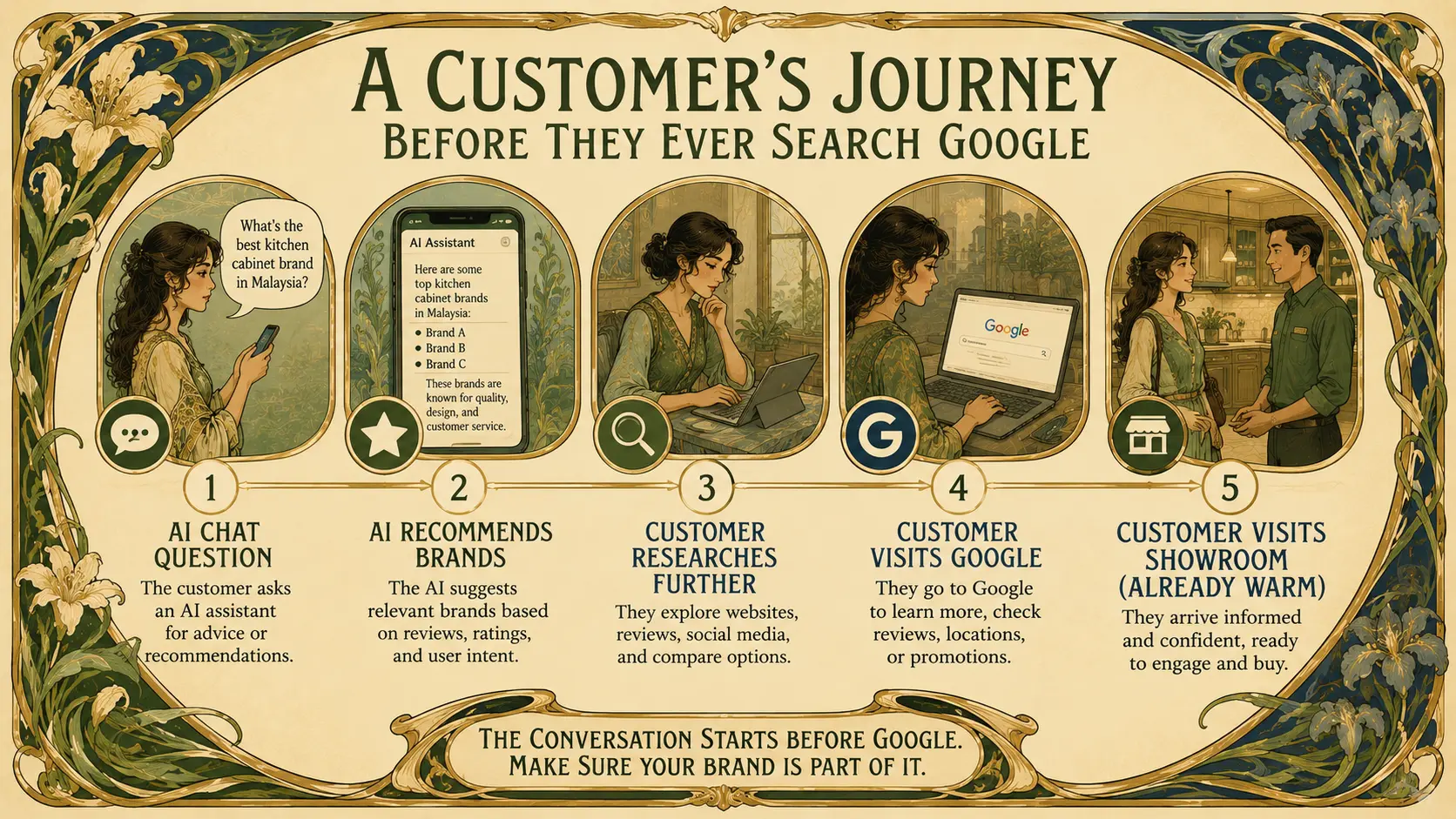
The research happens long before Google — and long before your showroom door opens.
This is not a future problem. It is happening right now, and most Malaysian retail and real estate businesses are not paying attention because their SEO dashboard still looks fine. Rankings are green. Traffic is steady. But the conversation that matters most — the one that happens before the search, before the click, before the enquiry — is a conversation their brand is sitting out of entirely.
A strong SEO service keeps your existing visibility intact. GEO builds the reputation that makes people choose you before they even know they are choosing. The gap between businesses that understand this and those that don’t is getting wider every month. The good news is that it is not too late to close it — but it does require building a brand identity worth citing, not just a keyword list worth ranking.
Find Out if Your Brand Is GEO-Ready — Get a Free Audit →
So Which One Does Your Business Actually Need — SEO, GEO, or Both?
The simplest way to remember this: SEO is the strategy that puts your brand in front of the right person. GEO is the strategy that makes sure that person already knows your name when they get there. That is what a well-run SEO strategy in Malaysia actually delivers — not sales directly, but the right people at the right moment.
Most businesses spend years chasing the right keywords and wondering why the numbers look good but the room stays quiet. The missing piece is almost always the same — a brand clear enough to be remembered, distinctive enough to be cited, and consistent enough for an AI platform to explain it to a stranger at 11pm when no salesperson is available.
That stranger is your next customer. They are doing their research right now. The only question worth asking is whether your brand shows up in that conversation.
If it does not, someone else’s does. GES Growth Engine Solutions helps retail and real estate businesses in Malaysia build both layers — so that by the time a customer walks through your door, the introduction has already been made.
Ready to Be Found and Known?
GES Growth Engine Solutions builds both layers for retail and real estate brands in Malaysia.
Talk to GES About Your Brand