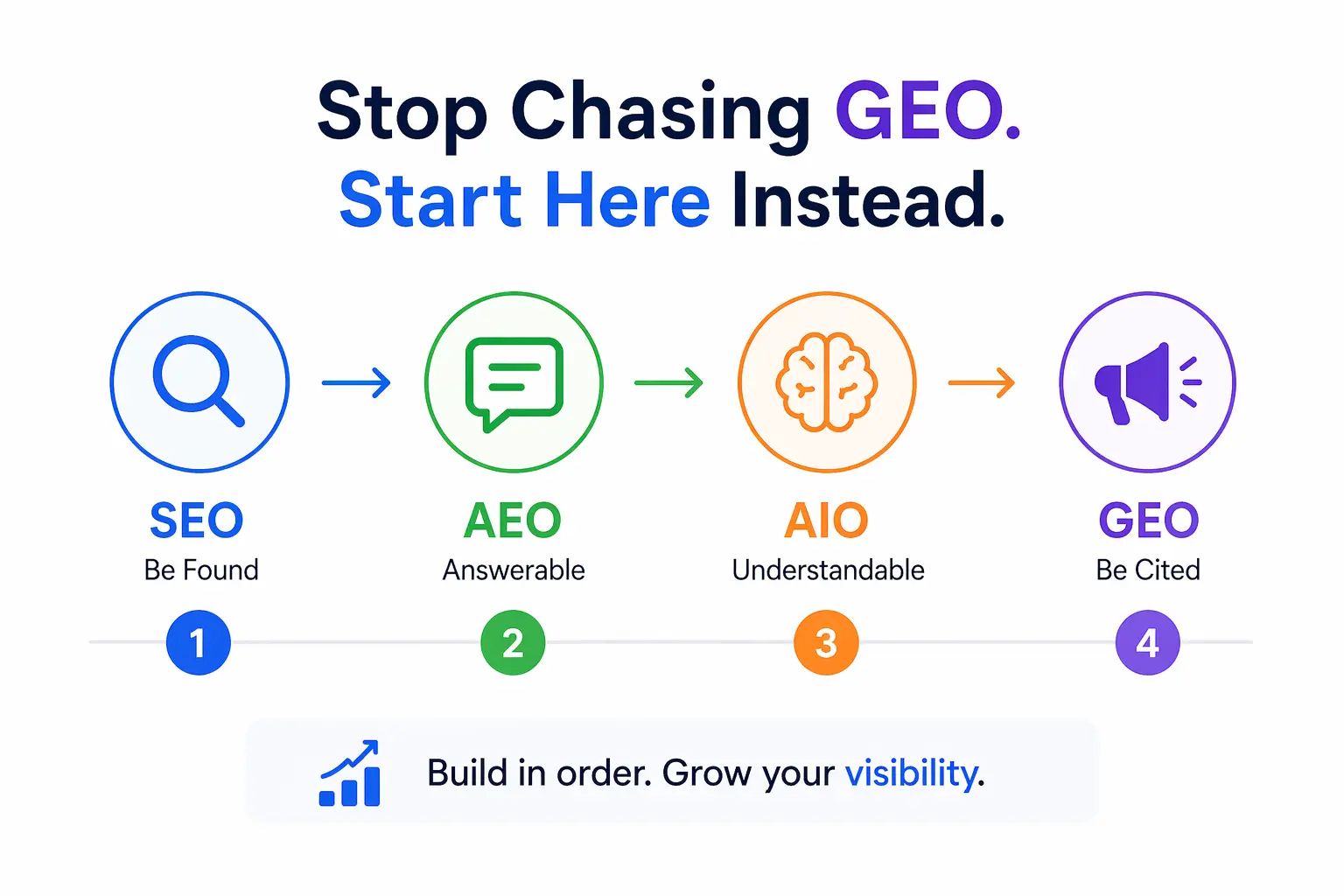
The foundation that makes your website findable on search engines.
Structuring your content so AI can extract a clear, direct answer from it.
Helping AI understand your entire brand, not just a single page.
Getting your brand actually named and cited by AI platforms like ChatGPT, Perplexity, and Gemini.
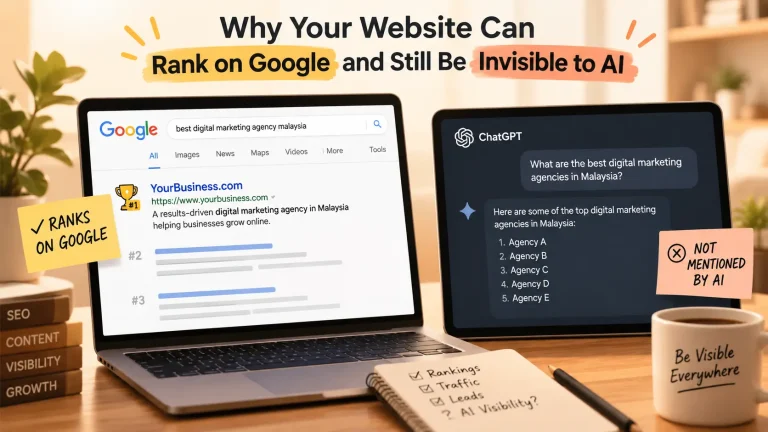
A business owner once told me, “I don’t care about SEO anymore — I just want to show up on ChatGPT.” I understood the excitement. But I also knew that without fixing the SEO foundation first, no amount of GEO work would stick. That conversation happens more often than you’d think. So let’s clear it up once and for all — what are SEO, AEO, AIO, and GEO, how are they different, and why does the order you build them actually matter?
Why These Four Terms Are Actually One System
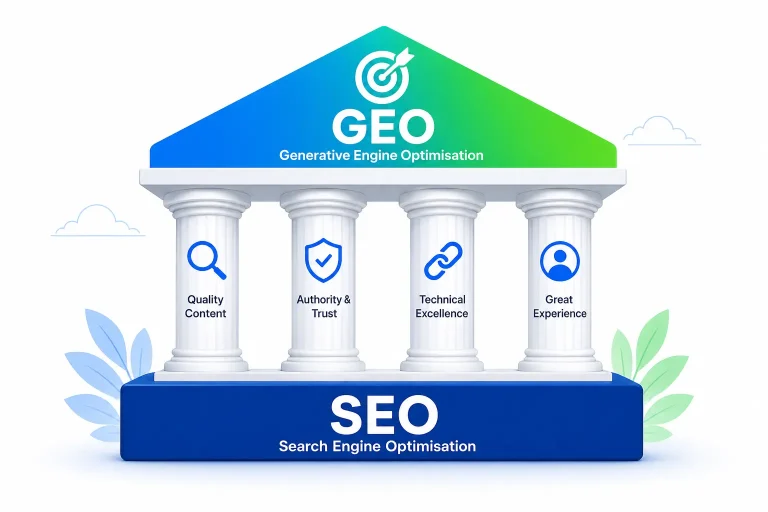
These aren’t four different strategies competing for your budget. They’re four layers of the same system. Think of it as a building. SEO is the foundation. AEO is the walls. AIO is the roof. GEO is whether people can see your building from the street. You can’t skip to the roof and expect the structure to hold.
Here’s how the four layers stack up:
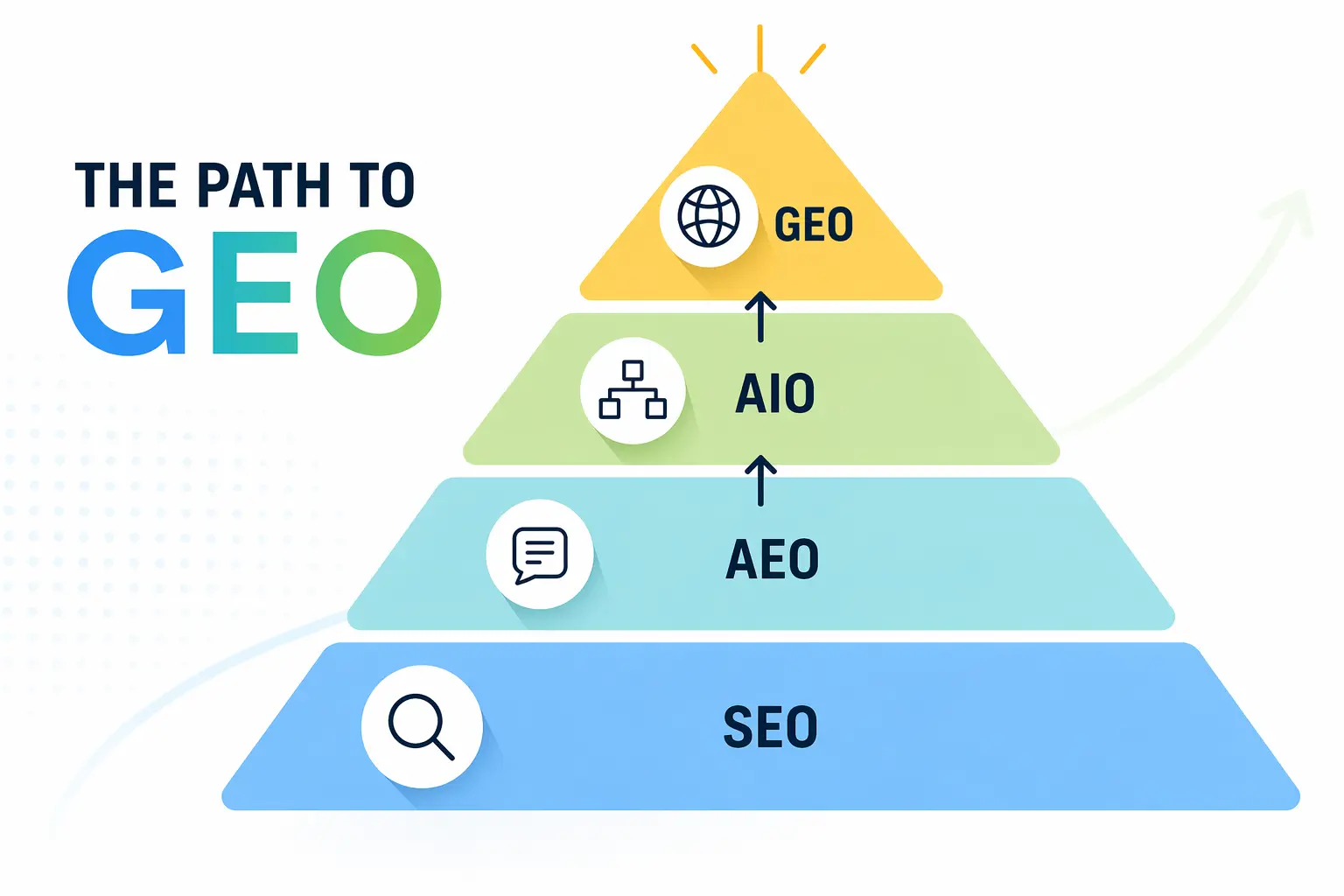
The four layers of modern search — each one builds on the last.
SEO — The Foundation Everything Else Is Built On
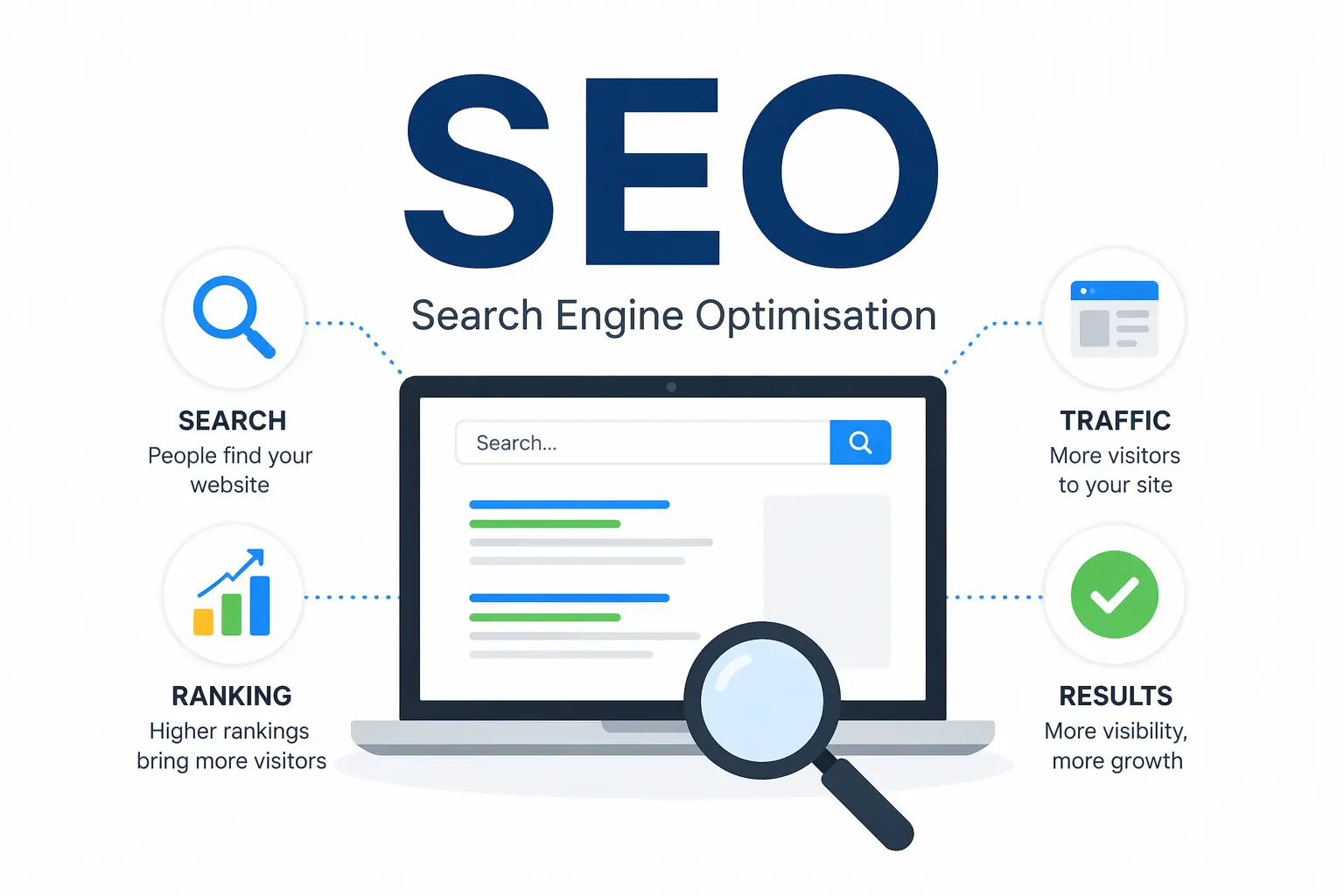
Search engine optimisation is the groundwork. It covers whether search engines can crawl your website, how authoritative your domain is, whether your keywords are healthy, how your traffic is trending, and whether there are any technical errors quietly dragging you down.
Before anything else, your website needs to be findable. If Google can’t properly read your site, nothing else on this list will work. SEO isn’t glamorous — but it’s the reason your front door is open. Every other layer in this system sits on top of what SEO builds.
Get this wrong, and you’re not just losing Google traffic. You’re invisible everywhere.
AEO — Are You Speaking the Language AI Is Listening For?
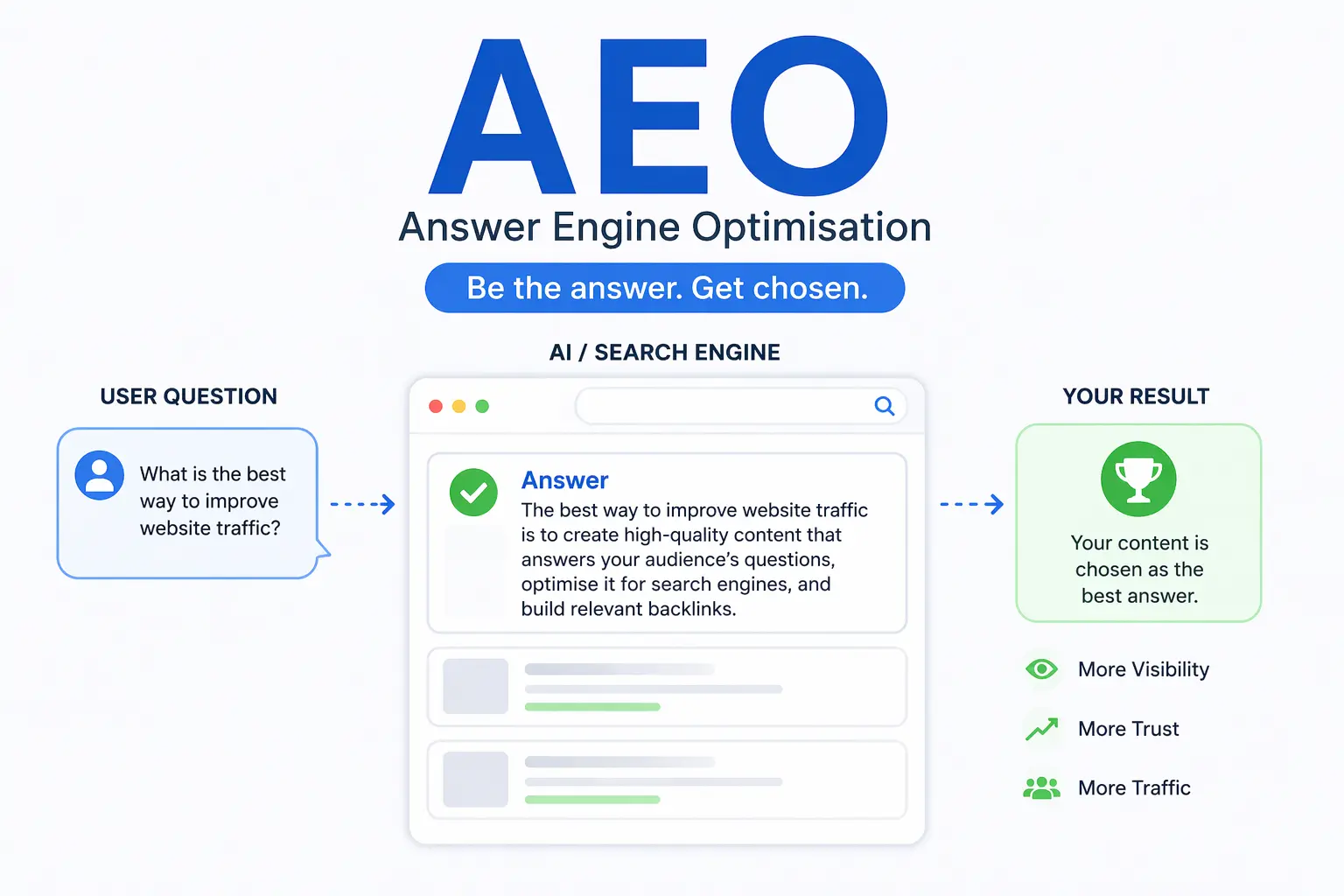
AEO is about how your content is structured. It looks at whether you have FAQ sections, whether your pages appear in featured snippets, and whether your writing is formatted in a way that lets AI extract a direct, clear answer quickly.
AI doesn’t browse your website the way a human does. It scans for answers. If someone asks ChatGPT or Perplexity a question related to your business, the AI pulls from content that already gives a clean, structured response. Dense paragraphs with no clear format? The AI moves on to someone else. AEO is about making your content speak the language AI is listening for.
If your content can’t be read as a direct answer, it won’t be used as one.
AIO — Does AI Actually Know Who You Are?
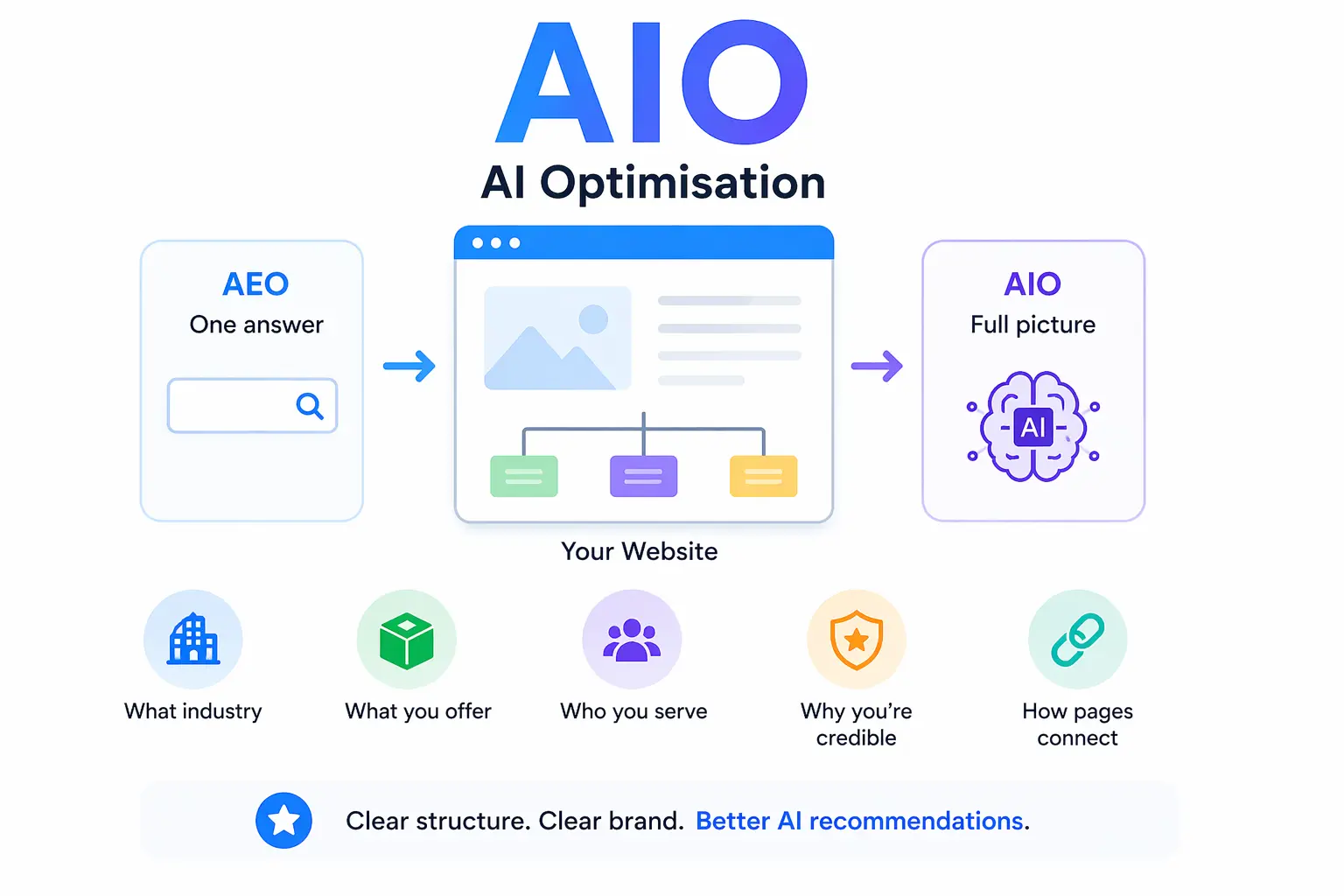
AIO goes deeper than a single page. It looks at the behind-the-scenes code that tells AI what your business is, how your headings are structured, how well your pages connect to each other, and whether the overall architecture of your site tells a coherent story.
While AEO helps AI find one clear answer, AIO helps AI understand your entire brand as a whole — a form of AI optimisation that goes beyond content. Can it tell what industry you’re in, what you offer, who you serve, and why you’re credible? Think of it as your brand’s CV for AI. A well-structured site with strong internal connections gives AI the full picture — and that’s what earns you a place in AI-generated recommendations.
GEO — The One Everyone Wants, But Few Are Ready For
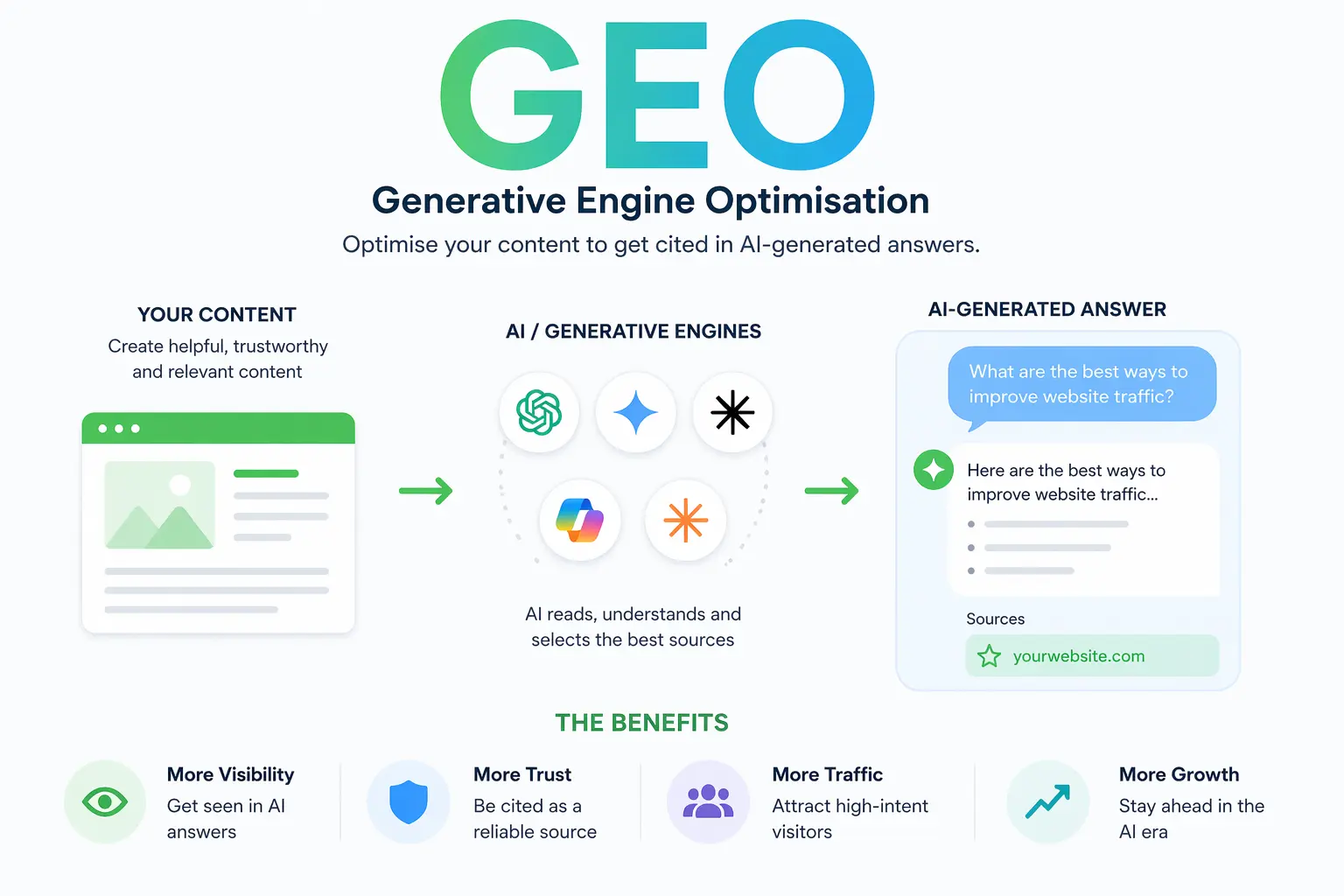
GEO is the real-world outcome. It measures whether your brand is actually being cited when someone asks a relevant question on ChatGPT, Perplexity, Gemini, Microsoft Copilot, or Google’s AI Overview. Not just indexed. Not just found. Named.
GEO is about awareness, not instant conversion. Being named by an AI platform is the modern equivalent of appearing on Page 1 of Google — it puts your brand in front of someone at the exact moment they’re looking for what you offer. It won’t close a sale on its own, but it plants your name in the right conversation at the right time. That’s where purchasing journeys begin.
GEO puts your name in the room. What happens next depends on everything beneath it.
Skip the Order and You’re Building on Sand
Here’s where most businesses go wrong. They hear about GEO and want to jump straight to being cited by ChatGPT. But if your SEO foundation is shaky, your content isn’t structured for answers, and AI can’t make sense of your brand — GEO simply won’t happen.
The order is non-negotiable. SEO first. Then AEO. Then AIO. Then GEO.
Each layer amplifies the one before it. Do them in sequence and the results compound. Skip the order and you’re spending money on a roof with no walls.
Most businesses are somewhere on this ladder right now — they just don’t know which rung. That’s the real starting point: not which acronym to chase, but where you actually stand today. A free website audit tells you exactly that — so you stop guessing and start building.
Frequently Asked Questions
SEO (Search Engine Optimisation) is the foundation that makes your website findable on search engines like Google. It covers crawlability, domain authority, keyword health, traffic trends, and technical errors.
AEO (Answer Engine Optimisation) is about structuring your content so AI can extract a clear, direct answer. It includes FAQ presence, featured snippet positions, and answer-ready formatting.
AIO (AI Integration Optimisation) helps AI understand your entire brand — not just a single page. It looks at schema markup, heading hierarchy, internal linking structure, and overall page architecture.
GEO (Generative Engine Optimisation) measures whether your brand is actually being cited by AI platforms like ChatGPT, Perplexity, Gemini, Copilot, and Google’s AI Overview. Not just indexed — named.
SEO first, always. It is the foundation every other layer depends on. Then AEO, AIO, and GEO — in that order. Each layer amplifies the one before it, and skipping the sequence means building without a foundation.
Not Sure Where Your Business Stands?
Let’s have a real conversation about your SEO, AEO, AIO, and GEO — and where to start.
Chat With Us on WhatsApp