Here’s a question almost every business owner asks at some point: “Is my SEO working?”
For business owners in Malaysia investing in SEO, it sounds simple. But the honest answer depends entirely on where you are in the journey — because SEO doesn’t show its results all at once. It reveals them in stages. And if you’re measuring the wrong thing at the wrong stage, you’ll always feel like something’s missing.
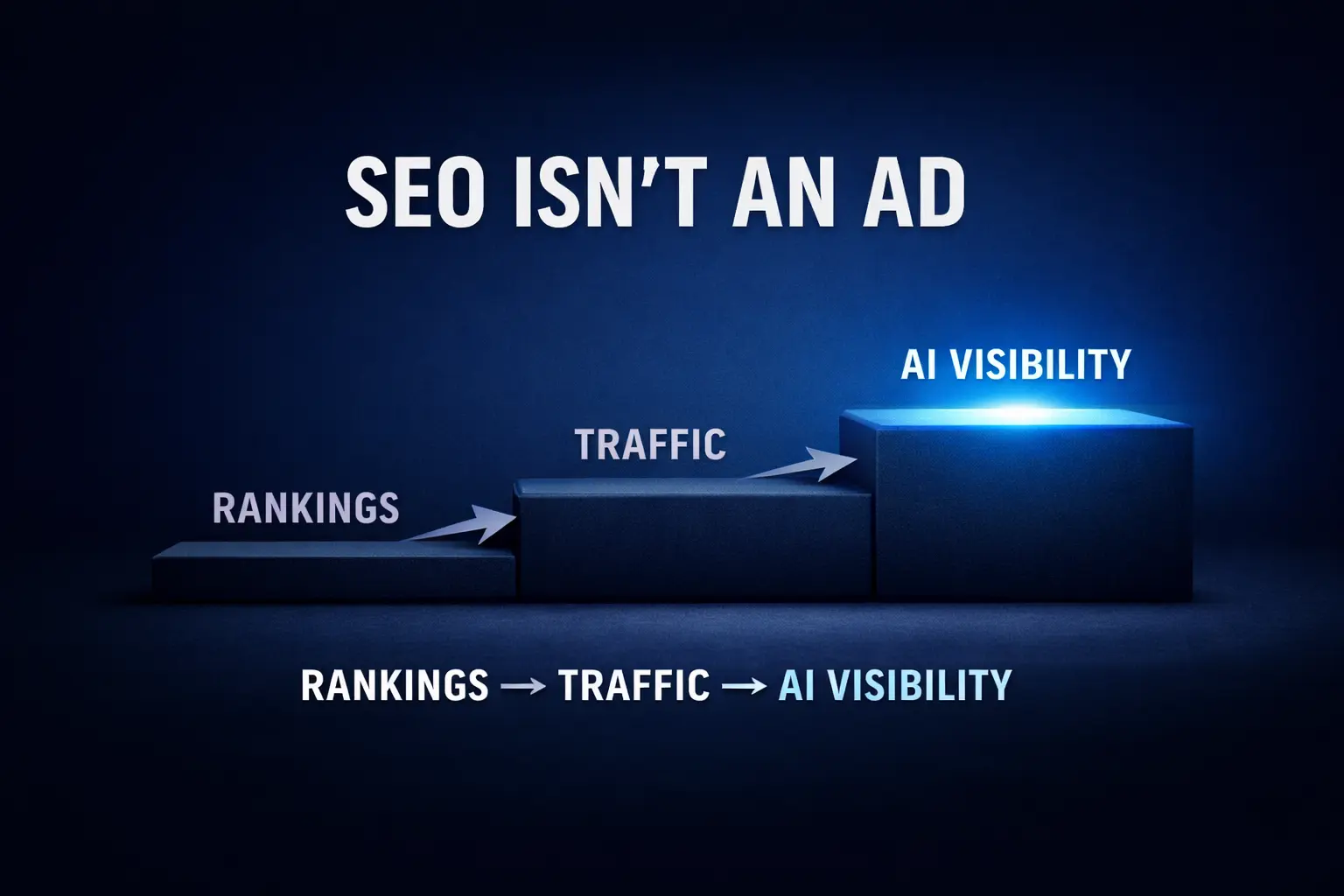
The 3-Stage Way to Read Your SEO Performance
SEO performance isn’t one metric — it’s three progressive layers, each building on the last.
Stage 1 — Rankings: the first signal, not the final verdict
Rankings are where everything begins. When your pages start climbing on Google, that’s SEO doing its foundational job — building visibility. But rankings alone don’t pay the bills. What a good SEO service in Malaysia should be showing you at this stage is not just where you rank — but whether those rankings are pulling in the right audience.
Stage 2 — Traffic: are the right people arriving?
Once rankings improve, traffic should follow. But more traffic doesn’t automatically mean more business. If your website has weak UX, slow load times, or content that doesn’t match what the visitor was looking for — they’ll leave. Traffic without conversion is a signal that something else needs attention, not that SEO failed.
Stage 3 — AI Visibility: the new layer most owners miss
Today, a growing number of buyers don’t just Google — they ask ChatGPT, Perplexity, or other AI tools for recommendations. If your business doesn’t appear in those answers, you’re invisible to an entire category of potential customers.
AI visibility is now part of the SEO picture. It won’t show up in your GA4 dashboard. But it’s quietly influencing whether people discover you — or your competitor — first.
See How We Measure SEO Performance
Why “SEO ROI” Is More Complicated Than It Looks
What GA4 conversions actually show you
When someone fills in your contact form or clicks your WhatsApp button, GA4 records it as a key event in GA4. That’s useful data. But what GA4 can’t tell you is why that person converted — or the full path they took to get there.
The conversion happened on your website. The decision happened somewhere else entirely.
GA4 shows you the last click. Your customer’s real journey started long before that.
Your customer’s journey before they clicked
Research shows that consumers typically engage with brands 3 or more times across digital channels before making a purchase. By the time they land on your website and convert, they’ve already made up most of their mind. SEO plays a role in that journey — often a big one — but it rarely acts alone.
Your customer’s real journey — most of it happens before they ever reach your website.
The platform trap: don’t judge your whole business from one window
GA4 is one window into your business. Google Search Console is another. Each platform shows you a slice of reality — not the full picture. Your website is a compulsory part of your online presence. It’s where people come to confirm what they already suspect about you. But it’s rarely where the decision starts.
No single platform holds the complete truth. The real picture lives across all of them — and in your customers’ own words.
The Most Honest Way to Measure SEO’s Impact
Track traffic and conversion trends — not single-session snapshots
Instead of asking “did SEO bring me a sale this month?”, ask “is my organic traffic growing over time, and are the people arriving more likely to engage?” Trends across 3, 6, and 12 months tell a far more accurate story than any single month’s numbers. A rise in key events in GA4 alongside growing organic traffic is a healthy pattern — it suggests the foundation is working, even if you can’t pinpoint every sale back to SEO.
Then go ask your customers directly
This is the most underused insight tool any business owner has — and it costs nothing. Ask your customers: “How did you find us?” Not through a form. In a real conversation, over WhatsApp or during onboarding. The answers will surprise you.
No dashboard captures this. But these answers tell you more about your marketing than any attribution model.
When you understand what each stage of SEO is telling you — rankings, traffic, AI visibility — and you stop expecting one platform to explain your entire business, something shifts. You stop chasing ROI as a number and start seeing SEO for what it really is: your permanent mark on the internet, working quietly across every platform your customer passes through.
If you’re not sure what stage you’re at — or what the data you’re seeing actually means — that’s exactly the conversation we’re here to have as your SEO partner in Malaysia.
Not sure what your SEO data is telling you?
Let’s have an honest conversation about where you’re at — and what’s actually working.
Chat With Us on WhatsApp

